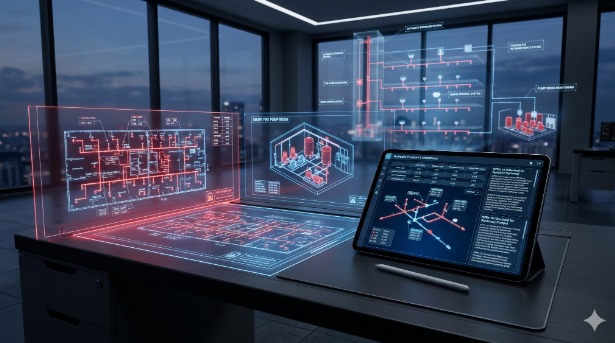
Fire Fighting engineering is one of the most essential disciplines in modern construction and building safety. Every successful building depends not only on functionality and aesthetics, but also on its ability to protect lives, assets, and operations during emergency situations.
Modern fire protection systems have evolved far beyond simple extinguishers and piping networks. Today’s projects require highly skilled engineers capable of understanding integrated fire protection strategies, safety regulations, hydraulic calculations, risk analysis, and system coordination within complex buildings and industrial facilities.
As construction technologies continue to advance, the demand for qualified Fire Fighting engineers is increasing rapidly across:
Commercial buildings
Hospitals
Industrial facilities
Residential compounds
Airports and infrastructure projects
Smart buildings and mega developments
Yet despite this growing demand, many engineers still enter the market without sufficient practical understanding of how real Fire Fighting systems are designed, coordinated, and implemented.
Understanding codes and formulas alone is no longer enough.
Modern Fire Fighting engineers must understand:
Real project workflows
Hydraulic system behavior
Equipment selection
Fire safety regulations
Site coordination
Pump room design
System integration
Inspection and testing procedures
This is why modern Fire Fighting training must evolve into a practical engineering experience rather than purely academic learning.
Our educational philosophy focuses on building industry-ready Fire Fighting engineers through practical implementation, real projects, structured workflows, and professional engineering standards.
1. Practical & Interactive Learning
Fire protection engineering is highly practical by nature.
The true understanding of Fire Fighting systems comes from applying calculations, analyzing scenarios, coordinating systems, and solving real safety challenges.
That is why our learning environment is designed around active technical participation.
Real Engineering Engagement
Instead of passive lectures, learners participate in:
Fire protection simulations
Hydraulic calculation exercises
Equipment selection workshops
Technical discussions
Real project analysis
Safety coordination scenarios
This creates a highly interactive environment that reflects actual engineering practice.
Immediate Practical Application
Every engineering concept is directly connected to implementation.
Learners apply concepts through:
Pipe sizing calculations
Pump selection exercises
Hydraulic analysis
Fire load understanding
Sprinkler layout development
Technical drawing interpretation
System zoning and coordination
This immediate transition from theory to execution strengthens technical understanding and professional confidence.
2. Learning Through Real Fire Protection Projects
Real Fire Fighting engineering involves far more than diagrams and calculations.
Actual projects include:
Safety constraints
Architectural coordination
Equipment limitations
Compliance requirements
Space restrictions
Cost considerations
Emergency operation planning
These real-world complexities are difficult to understand through theory alone.
Exposure to Real Engineering Documents
Learners work with practical project materials including:
Fire Fighting layouts
Pump room drawings
Sprinkler system designs
Hydraulic calculation sheets
Technical specifications
Equipment datasheets
Fire alarm coordination drawings
This exposure prepares engineers for the documentation standards used in consulting firms and project sites.
Mentorship from Experienced Engineers
Our mentors bring years of practical Fire Fighting experience from real projects and construction environments.
They guide learners through:
Common design mistakes
Site implementation challenges
Code interpretation
Technical coordination methods
Safety-focused engineering decisions
Real inspection and testing procedures
This mentorship transfers valuable field experience directly to learners.
3. Structured Engineering Workflow
Professional Fire Fighting design follows a logical engineering process.
To replicate real industry practice, our training follows a progressive workflow model that develops technical understanding step by step.
Phase 1 — Fundamental Principles
Learners begin with:
Fire protection basics
Understanding fire behavior
System types and applications
Safety concepts
Reading Fire Fighting drawings
Basic hydraulic principles
This phase builds essential technical foundations.
Phase 2 — System Design & Coordination
After mastering fundamentals, learners progress into:
Sprinkler system design
Standpipe systems
Hose reel systems
Fire pump selection
Water storage calculations
Coordination with architectural and MEP systems
At this stage, learners begin understanding how integrated Fire Fighting systems operate inside real buildings.
Phase 3 — Complete Project Simulation
The final phase simulates actual project delivery workflows.
Learners participate in:
Full Fire Fighting system design
Hydraulic calculation review
Code compliance verification
Coordination meetings
Design revisions
Final project submission and approval simulation
This mirrors the processes used by real engineering consultants and contractors.
4. Fire Codes, Standards & Safety Compliance
Fire Fighting engineering is entirely driven by safety standards and regulatory compliance.
Every design decision directly affects:
Human life safety
Emergency response performance
Property protection
Business continuity
Legal compliance
Therefore, engineers must master both technical design and applicable codes.
Standards-Oriented Training
Learners train using major international and regional standards including:
NFPA Standards
International Building Codes (IBC)
SBC Fire Codes
Egyptian Fire Codes
Civil Defense requirements
International fire protection practices
This prepares engineers to work confidently across multiple regional markets.
Safety-Focused Engineering Mindset
Safety is embedded throughout the entire learning experience.
Learners understand:
Emergency response logic
Fire risk reduction
System reliability principles
Redundancy planning
Inspection and maintenance requirements
Operational safety considerations
This develops engineers capable of designing systems that protect both people and infrastructure.
5. Training Designed for Every Professional Level
Every engineer enters the field with different levels of experience and technical exposure.
Our training structure supports engineers throughout every stage of professional development.
Beginner Level
Objective
Build strong Fire Fighting fundamentals and technical awareness.
Focus Areas
Fire protection basics
Understanding system components
Reading drawings
Basic calculations
Fire safety concepts
Introduction to standards and codes
Learning Style
Guided practical exercises with simplified technical implementation.
Intermediate Level
Objective
Develop professional design and coordination skills.
Focus Areas
Hydraulic calculations
Pump and pipe sizing
System zoning
Technical coordination
Design review
Site-related challenges
Learning Style
Realistic project-based scenarios with practical engineering problem-solving.
Expert Level
Objective
Master advanced Fire Fighting system design and technical leadership.
Focus Areas
Complex hydraulic systems
Large-scale facility protection
Industrial Fire Fighting systems
Value engineering
Code interpretation
Technical management and project leadership
Learning Style
Advanced engineering analysis, full-project simulation, and strategic safety planning.
The Future of Fire Fighting Engineering Requires Practical Expertise
Modern Fire Fighting engineers are expected to do far more than complete calculations.
They must:
Analyze risks effectively
Design reliable protection systems
Coordinate across disciplines
Apply international safety standards
Solve real technical challenges
Protect lives and infrastructure through intelligent engineering decisions
Modern Fire Fighting education must therefore evolve into a practical ecosystem that combines technical depth, real-world implementation, safety awareness, and professional engineering practice.
The goal is not simply to teach Fire Fighting systems.
The goal is to develop engineers capable of designing safer buildings, protecting critical infrastructure, and leading the future of fire protection engineering.
Comments (0)

Categories
Recent posts

Preparing Engineers to Design Efficient, ...
30 May 2026
How to Shape Job-Ready Engineers for the ...
30 May 2026
Building Engineers Who Can Design, ...
30 May 2026